Yoga Teacher Training Intensive in Mendocino County: Earn Continuing Education Credits While Deepening Your Practice
Teaching yoga is a calling that asks everything of you—your energy, attention, creativity, and authentic presence. But who fills your well when you're constantly pouring from it? Mary Paffard's Summer Retreat 2026, taking place July 2-7, 2026 (Thursday through Monday) at Spirit Camp in Mendocino County, Northern California, offers yoga teachers five nights to return to student role, to deepen personal practice that teaching draws from, and to earn Yoga Alliance continuing education credits (CEUs) in the process. This professional development intensive qualifies for Yoga Alliance CEU certification (provided upon request at completion), making it valuable for both RYT-200 and RYT-500 teachers maintaining their credentials while actually addressing the deeper need for renewal, inspiration, and reconnection to why you started teaching in the first place. Led by Mary, who directed comprehensive Teacher Training at Yoga Mendocino for a decade (2000-2010) and continues contributing to recognized programs internationally, this retreat offers the rare combination of rigorous personal practice (long asana sessions combining active and restorative work, breathwork, meditation, morning silence) and professional insights that emerge from studying with an educator who literally trained hundreds of teachers. This yoga and mindfulness retreat welcomes experienced practitioners and teachers ready for advanced exploration, comfortable with intensive practice and self-reflection, and seeking the kind of renewal that prevents burnout while reigniting teaching passion. Explore the full calendar at Spirit Camp Retreats.
For Teachers Ready to Go Deeper: A Five-Night CEU-Qualifying Intensive That Renews Your Practice and Teaching
Join Mary Paffard, Former Teacher Training Director, for an Advanced Exploration Earning Yoga Alliance Continuing Education Credits
The structure of Mary's Summer Retreat serves teachers on multiple levels simultaneously. On the surface, it provides the Yoga Alliance CEUs required for certification maintenance—teachers can request certificates documenting their participation in this approved intensive. But the real value goes far deeper: this is opportunity to be student again, to receive rather than constantly giving, to let someone else hold space while you explore your own edges, challenges, and breakthroughs. The long asana sessions (90+ minutes combining vigorous sequences and restorative poses) challenge your body and reveal patterns you might have stopped noticing in your own practice. The daily breathwork and meditation deepen the mindfulness that should inform teaching but often gets lost when you're focused on cueing, adjusting, and managing class dynamics.
The retreat's optional evening discussions—described as "for all levels including teachers"—provide explicit space for exploring teaching questions, philosophy, and methodology. These aren't formal lecture modules but rather organic conversations where teachers can share challenges they face in their classes, discuss how to skillfully work with different student populations, explore how to maintain integrity while making yoga accessible, and consider philosophical questions about what we're actually doing when we teach. The peer learning proves as valuable as Mary's guidance—many participants are themselves teachers, often with decades of experience, and the collective wisdom in the room creates remarkable resource for professional development.
What distinguishes this from typical teacher training modules or weekend workshops is the emphasis on deepening personal practice rather than accumulating more techniques or information. Yoga teaching suffers when teachers become repositories of knowledge disconnected from lived experience—students can sense the difference between a teacher sharing from authentic practice versus one performing expertise learned secondhand. Five nights of intensive immersion, including morning silence until lunch that eliminates social performance and allows genuine self-examination, provides the kind of personal depth work that then naturally enriches teaching without forcing it. You're not learning new cueing or sequencing tricks; you're remembering why yoga matters, reconnecting to the transformation that initially called you to teach, and refilling the well that your students drink from.
The 20+ year tradition of this summer gathering means many participants return annually—creating continuity and community that proves especially valuable for teachers, who often work in isolation managing their own studios or as contractors moving between facilities. You'll practice alongside fellow teachers who understand the specific challenges of this profession, who won't judge you for needing rest or admitting difficulty, and who create safety for the vulnerability that genuine renewal requires. Located just three hours North of the Bay Area including San Francisco, Oakland, Berkeley, and Palo Alto, Spirit Camp offers accessible professional development without requiring extensive travel during your limited time off from teaching.
The Importance of Continuing Education: Why Experienced Teachers Need Regular Deep Practice Immersion
Understanding How Extended Retreats Prevent Teacher Burnout and Reignite the Passion That Led You to Teaching
The phenomenon is so common it's almost cliché: yoga teachers who barely practice anymore beyond the classes they teach. You started with deep personal practice that transformed your life, trained intensively, began teaching to share what you'd discovered—and gradually the teaching consumed all the time and energy that personal practice once received. Your classes showcase technical proficiency and you effectively serve your students, but something essential has dimmed. The passion that originally animated your teaching feels distant, replaced by routine and perhaps a low-level exhaustion you've learned to ignore. Continuing education requirements recognize that teaching yoga is living practice requiring ongoing nourishment, not static credential you earned once and now just maintain.
Extended retreat immersion provides antidote to this depletion by reversing the usual dynamic: for five days, you receive rather than give, you're held rather than holding others, you explore your own process rather than facilitating theirs. This isn't selfish but rather essential maintenance for sustainable teaching. The well metaphor proves apt—you can't indefinitely draw water from an empty well. Retreat time allows the well to refill through both rest (the nervous system reset that comes from not teaching, not managing logistics, not being "on") and deep practice (the personal exploration that reminds you what yoga actually offers). Many teachers return from this retreat reporting that their teaching feels fresh again, that they've rediscovered enthusiasm they thought was permanently lost, and that they're offering something genuine rather than going through motions.
Witnessing Mary's teaching approach—her integration of poetry, imagery, and eco-inquiry into practice, her skill at weaving mindfulness through movement and stillness, her capacity to challenge while remaining compassionate—provides professional inspiration different from copying techniques. You're not learning to teach like Mary but rather observing how an authentic teacher brings her whole self to the work: her Buddhist Eco-Chaplain training, her four decades of practice, her life on an off-grid farm, her genuine love for this particular gathering. This observation sparks reflection about your own authentic teaching voice and what unique combination of background, interests, and insights you bring that no one else offers exactly the same way.
Research on burnout in helping professions (including teaching, therapy, medicine) consistently shows that regular professional development combining technical skill enhancement with personal renewal significantly reduces burnout while improving practitioner wellbeing and effectiveness. Yoga Alliance's continuing education requirements aren't bureaucratic hurdles but rather recognition that good teaching requires ongoing learning, self-examination, and connection to community of practice. Explore resources on teacher wellbeing and continuing education to understand the documented benefits of sustained professional development for yoga teachers.

Photo of Deer Haven, one of the our many unique cabin spaces. This cabin has three beds. Cabins have between 1 to 8 beds each and provide several different sleeping arrangements for Yoga and mindfulness retreat. All cabin spaces are included in Yoga Alliance CEU retreat California.
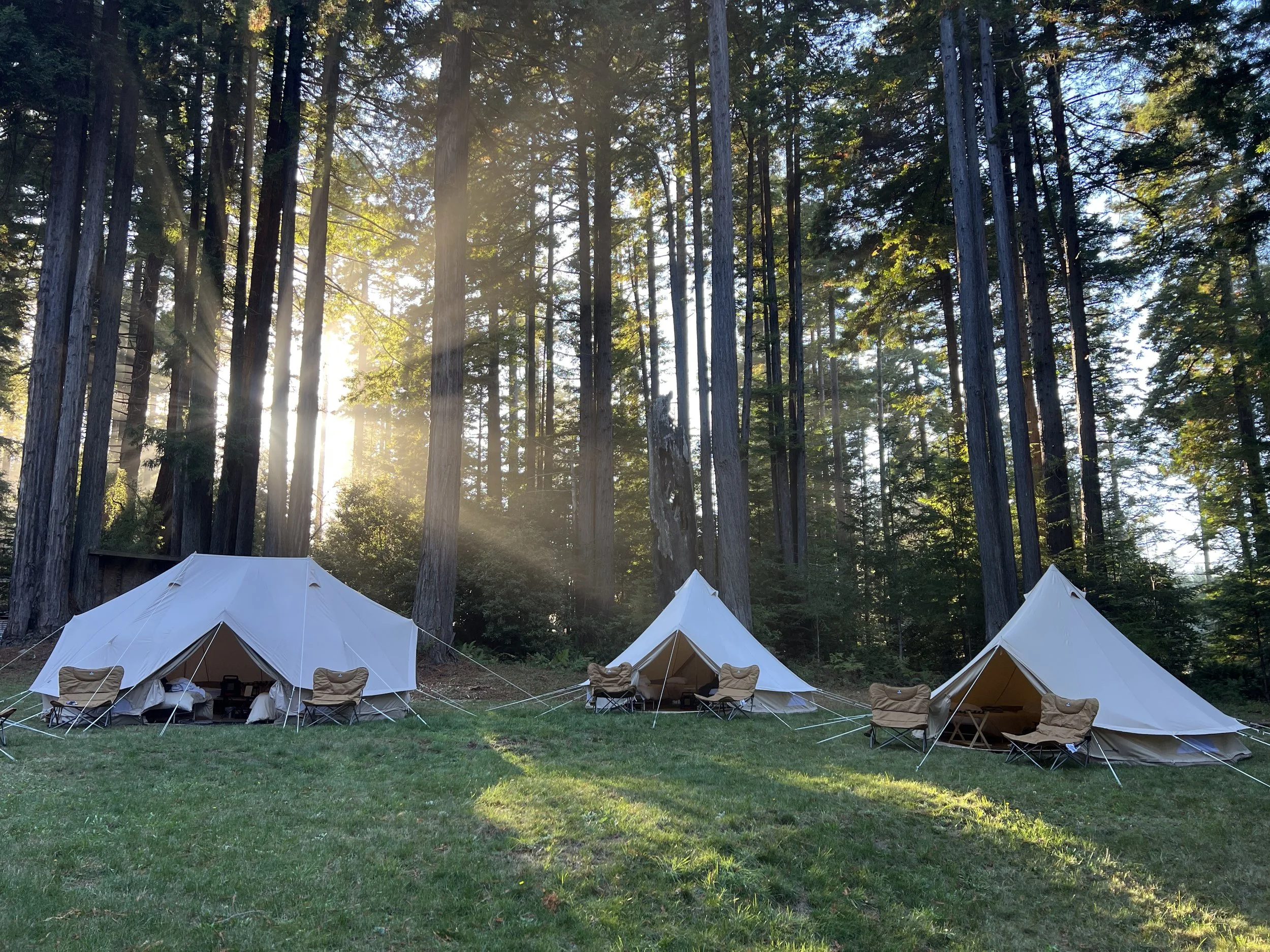
Photo of Group Glamping Tents Setup in Sunset Meadow. We have 10 Glamping Structures that can be added with 1to 3 beds each. This can increase bed capacity of campus to 50 guests across 20 unique accommodation spaces.
Mary Paffard: Teacher of Teachers with a Decade Leading Comprehensive Training Programs
Learn from an Educator Who Trained Hundreds of Teachers and Continues Contributing to Recognized International Programs
Mary Paffard's credentials for offering meaningful continuing education extend beyond her four decades teaching yoga since the mid-1980s. Her decade (2000-2010) directing Teacher Training at Yoga Mendocino—a nonprofit she co-founded—means she designed comprehensive curriculum spanning anatomy, philosophy, teaching methodology, ethics, business practices, and personal development. She selected faculty to teach specialized topics, evaluated hundreds of trainees for readiness to teach, and created the container where aspiring teachers transformed from students into educators. This work required deep understanding not just of yoga practice but of pedagogy itself: how adults learn, how to create psychological safety for challenging material, how to balance support with appropriate challenge, how to recognize when someone needs more time versus when they're ready to advance.
Her continued involvement with teacher training faculties at Piedmont Yoga and recognized programs in California, Mexico, and Costa Rica demonstrates ongoing refinement of her educational approach rather than resting on past accomplishments. The yoga world's understanding of best practices in teacher education continues evolving through research and cross-cultural exchange, and Mary's sustained engagement ensures her teaching reflects current wisdom rather than outdated models. Her Buddhist Eco-Chaplain credentials and her work teaching yoga on Vipassana retreats show depth beyond typical yoga training—she brings contemplative rigor and spiritual authenticity that many contemporary teacher trainings lack.
The breadth of her experience proves equally important: teaching since the 1980s means she's witnessed multiple waves of yoga's evolution in the West, from niche practice to mainstream phenomenon, from strictly physical emphasis to growing integration of philosophy and mindfulness, from predominantly thin-young-flexible practitioners to true diversity of bodies, ages, and abilities. Her volunteer work leading educational exchanges with Cuban yoga communities since 1998 (through Yogava.org) demonstrates commitment to grassroots, community-based practice rather than commercial yoga industry—teaching that prioritizes authentic transformation over profit. This perspective proves valuable for teachers navigating the sometimes-uncomfortable commercialization of yoga while trying to maintain integrity.
Her signature teaching approach—infusing practice with poetry, imagery, and eco-inquiry—offers teachers fresh perspectives for their own work. You might not adopt these specific elements, but witnessing how authentically they arise from Mary's own interests and background sparks thinking about what unique dimensions you could weave into your teaching. Many returning participants are themselves teachers who explicitly return to study with Mary annually, refine their craft through her mentorship, and maintain connection to teaching community where depth and authenticity matter more than Instagram followings or studio empires.
Spirit Camp as Professional Development Setting: Where Teachers Can Be Students in a Supportive Peer Community
Experience Accommodation Ranging from Budget-Friendly Camping to Private Cabin Retreat, Plus Optional Evening Discussions Tailored for Teaching Professionals
Spirit Camp functions as ideal professional development environment for teachers because it honors the reality that yoga teachers' financial situations vary dramatically. Some earn substantial income through packed classes and workshops; others piece together barely-viable livings teaching $35 drop-ins. The accommodation options reflect this range: budget-conscious teachers can camp in Sunset Meadow (bring your own tent) or choose bunkhouse options, while those wanting maximum restoration between intensive sessions can book private cabins with comfortable beds and solitude. The democratizing effect of this range means teachers from different economic circumstances practice alongside each other without hierarchy—shared commitment to depth matters more than who can afford luxury accommodations.
The Sanctuary and Redwood Lodge offer excellent teaching/learning spaces that teachers can observe and potentially draw inspiration from for their own studios or classes. The Sanctuary's copper roof with central skylight, 20-foot south-facing windows flooding space with natural light, and acoustic properties that support both silence and chanting—teachers notice these design elements and consider how environment shapes practice. The Redwood Lodge's spacious main hall with stone fireplace that can serve as teaching focal point, the arrangement of skylights creating even illumination, the wood-burning stove adding warmth without harsh mechanical heat—all demonstrate thoughtful design supporting embodied practice. Even the communal aspects (shared bathhouse, group meals, fire circles) model the community-building that good yoga spaces cultivate.
The optional evening events including meditation/yoga discussions explicitly welcome teaching-level questions and conversations. You might explore topics like: How do you skillfully work with students' trauma without becoming therapist? What's appropriate relationship between yoga philosophy and the secular classes most Westerners attend? How do you maintain your own practice while teaching full-time? What ethical guidelines help navigate the power dynamics inherent in the student-teacher relationship? These conversations, combined with informal peer discussions throughout the retreat, provide the kind of professional community many teachers desperately need but rarely access—space to be honest about challenges, to learn from others' experience, and to recognize you're not alone in struggles that teaching presents.
The simple, nourishing vegetarian meals by chef James Sant support teachers' intensive practice without requiring thought or planning—you're simply fed well, allowing complete focus on your own process. The forest environment offers fresh inspiration for nature-based teaching approaches and metaphors that make abstract yoga philosophy tangible: trees' interconnected root systems illustrating interdependence, seasons modeling change and impermanence, the ecosystem demonstrating how diversity creates resilience. Teachers often report returning home with renewed inspiration for how to make yoga's wisdom accessible and relevant to contemporary students.
Mendocino County: California's Premier Location for Teacher Renewal Three Hours North of the Bay Area
Accessible from Major Yoga Markets Yet Removed Enough to Truly Unplug and Renew Your Teaching Passion
Spirit Camp's location proves strategically ideal for California yoga teachers. Situated approximately three hours North of San Francisco, Oakland, Berkeley, Palo Alto, and San Jose—the region's major yoga markets—it's close enough that travel doesn't consume your limited time off yet far enough that you genuinely leave behind studio responsibilities, teaching schedules, and the general intensity of urban life. Many California teachers know colleagues who attend or have heard about this retreat through yoga community networks, creating implicit peer endorsement. The accessibility from major airports (SFO and Oakland about three hours away, Santa Rosa just two hours) makes this viable even for teachers from Southern California or beyond who want continuing education in beautiful setting without international travel.
The Redwood ecosystem itself provides endless teaching metaphors and inspiration. These trees demonstrate interconnection (their root systems literally share nutrients), resilience through challenges (thick bark allows survival of periodic fires), patience (growth spanning centuries rather than seeking instant results), family structures (groves often growing from single parent tree's root sprouts), and the integration of reaching toward light while simultaneously rooting deeply—exactly the balance good teaching requires. Teachers often find that simply spending time in the forest generates fresh language for describing yoga concepts to students, making abstract philosophy tangible through natural examples students can relate to.
Mendocino town's thriving arts community offers additional inspiration for teachers during free time. Visiting galleries, watching artists at work, attending performances, or simply wandering streets lined with creative expression sparks recognition that teaching is art requiring both technical skill and creative vision. The contrast to typical teaching environments—often windowless studios under artificial light in commercial spaces—proves restorative in itself. Here you practice surrounded by living forest, breathe pristine air, sleep in quiet broken only by natural sounds, and remember that yoga emerged from sages spending time in nature, not from strip-mall studios.
The pristine environment supports not just professional renewal but physical restoration teachers desperately need. Teaching is physically demanding—demonstrating poses, offering hands-on adjustments, moving through studios day after day—and many teachers carry injuries or chronic pain from years of repetitive demonstration. The combination of personal practice that respects your actual body (rather than performing for students), the restorative sessions allowing deep release, the forest's documented physiological benefits (reduced stress hormones, enhanced immune function), and the simple gift of rest creates conditions for genuine healing. Ready to explore more professional development opportunities? Visit the Spirit Camp retreats calendar to discover additional offerings throughout the year.
Frequently Asked Questions for Yoga Teachers Considering This CEU Intensive
How do I receive my CEU certificate?
Mary has established process for Yoga Alliance continuing education documentation. At the completion of the five-night program, simply request your CEU certificate and she'll provide it with the necessary information for submitting to Yoga Alliance to maintain your RYT-200 or RYT-500 certification. The retreat qualifies for continuing education hours—the specific number may vary based on total contact hours, but typically these intensive multi-day programs provide substantial CEUs toward your renewal requirements. Keep the certificate for your records as you'll need to report continuing education when your certification period ends. The administrative aspect is straightforward; Mary understands teachers' need for proper documentation and makes the process easy. What matters more than bureaucratic compliance is that this retreat offers the kind of meaningful professional development that actually deepens your teaching rather than just checking boxes—you'll leave with renewed inspiration, fresh perspectives, and reconnection to why you teach, not just a certificate to file away.Will there be specific teaching methodology discussions?
The optional evening discussions include teaching topics and professional questions, creating space for explicit exploration of pedagogy, methodology, and the challenges teachers face. However, the emphasis throughout the retreat remains on deepening personal practice rather than accumulating more teaching techniques. This reflects Mary's understanding (earned through her decade directing teacher training) that the most effective continuing education for experienced teachers isn't learning new tricks but rather going deeper into your own practice—this depth naturally enriches teaching without forcing it. When you genuinely experience something in your body, you can guide students through it authentically; when you're just repeating what you learned in training, students sense the secondhand quality. The informal peer conversations throughout the retreat also provide substantial professional learning as teachers share experiences, challenges, and insights with each other. You'll likely leave with fewer "techniques" but more authentic teaching presence—which serves students far better than a notebook full of sequences you copied from someone else.What makes this different from a typical teacher training module?
Most continuing education offerings focus on adding content: new styles or techniques, specialized populations like prenatal or seniors, business skills, advanced anatomy. These modules have value, but they don't address the deeper need experienced teachers face—renewal of personal practice and reconnection to why you started teaching. This retreat prioritizes your own development as practitioner rather than just expanding your teaching toolkit. You're learning through being student again: receiving teaching, observing how Mary holds space, noticing what supports your own deepening and what creates obstacles, experiencing the transformation that happens when someone truly sees and meets you where you are rather than imposing predetermined curriculum. This experiential learning proves more valuable than theoretical instruction because it's happening in your body and heart, not just your mind. You're also witnessing Mary's unique approach—her integration of poetry, imagery, and eco-inquiry into practice—not to copy it but to spark thinking about your own authentic voice and what unique gifts you bring to teaching that no one else offers exactly the same way.
Two Inspiring Destinations Near Spirit Camp for Teacher Reflection and Renewal
Continue Your Professional Development Through Mendocino's Art Galleries and Natural Classrooms
Mendocino Art Center: Cross-Disciplinary Inspiration for Creative Teaching
In the heart of Mendocino town, the Mendocino Art Center functions as vibrant creative hub offering classes in visual arts, ceramics, jewelry-making, textile arts, and more, plus galleries showcasing local and regional artists' work. For yoga teachers, visiting this center provides valuable cross-disciplinary learning: how do other educators across creative disciplines communicate concepts, inspire students, hold space for vulnerability and risk-taking, provide useful feedback without crushing confidence? Watching a ceramics instructor guide students through wheel-throwing or observing a painting teacher help someone mix colors offers insights applicable to yoga teaching—all creative education involves similar challenges around meeting students where they are, balancing technique with expression, knowing when to intervene and when to step back.
The rotating exhibitions often feature nature-inspired work reflecting the coastal environment's influence on local artists—teachers might find visual metaphors they can reference in classes, or simply absorb the beauty and creative energy that reminds them teaching is art requiring both technical skill and imaginative vision. The gardens surrounding the center and ocean views from certain vantage points create contemplative spaces for reflection on your own teaching path: What called you to this work? What sustains you when it's difficult? What unique gifts do you bring that students wouldn't receive from any other teacher? How do you balance making a living with maintaining integrity? The Art Center embodies the creative community and mutual support that teachers need but often lack—spending time here reminds you that artists across disciplines face similar challenges and that community, rather than competition, serves everyone better.
Point Cabrillo Light Station: Historical Metaphors for the Teaching Path
About 20 minutes north of Mendocino, Point Cabrillo Light Station State Historic Park preserves a functioning lighthouse that guided mariners past dangerous headlands from 1909 to present. The easy 1-mile trail from parking to lighthouse allows contemplative walking through coastal scrub and wildflower meadows, with dramatic Pacific views throughout. For teachers, this site offers rich metaphors worth contemplating: the lighthouse represents steady presence guiding others through darkness and confusion—not by removing obstacles but by providing reliable reference point they can navigate from. The lighthouse keeper's house demonstrates sustained commitment and daily practice—the keeper maintained equipment, trimmed wicks, cleaned lenses, kept logs—unglamorous repetitive work that nonetheless meant the difference between safe passage and shipwreck for countless vessels.
The meeting of land and sea at this dramatic headland suggests the integration teachers facilitate: helping students bridge material and spiritual dimensions, ordinary and sacred, body and mind—all the false binaries that yoga works to dissolve. The interpretive signs and volunteer docent program (when available) demonstrate skilled educational communication: how to make history accessible and engaging, how to tell stories that convey information while stirring imagination, how to meet visitors where they are rather than assuming they share your background knowledge. Teachers can observe these educational techniques and consider applications to their own teaching. Many retreat participants visit Point Cabrillo on a free afternoon, using the walk and lighthouse exploration as reflection practice: What light do I offer my students? What sustains my daily practice through years and decades? How do I maintain my equipment (physical body, mindfulness capacity, teaching skills) so I can continue serving? What am I actually illuminating—specific techniques, or something deeper about what it means to be human? The dramatic beauty and historical resonance make this visit memorable contemplative experience that often yields insights participants carry long after the retreat ends.
Ready to Renew Your Teaching Through Deep Personal Practice?
Teaching yoga without maintaining your own deep practice is like trying to give directions to a place you've never visited—you might technically know the route, but you can't describe the actual experience of being there. Mary Paffard's Summer Retreat 2026 offers yoga teachers five nights to return to student role, to practice intensively without performing for others, to receive rather than constantly giving, and to refill the well that your teaching draws from. The Yoga Alliance CEU qualification makes this practical for maintaining certification, but the real value extends far beyond administrative requirements into genuine renewal of passion, inspiration, and authentic connection to why you started teaching.
From long practice sessions that challenge your edges and reveal patterns, to breathwork and meditation deepening the mindfulness that should inform teaching, to optional evening discussions addressing professional questions, to morning silence allowing honest self-examination, to the forest environment offering metaphors and inspiration—every element supports both personal and professional development. Mary's credentials as former Teacher Training Director, her four decades of teaching experience, and her continued contributions to recognized programs create conditions where meaningful learning happens.
Join Mary and a community of dedicated practitioners and teachers July 2-7, 2026 for this professional development intensive. Limited spots remain—reserve yours at the Summer Retreat 2026 page, or explore other continuing education opportunities at Spirit Camp Retreats. Your students deserve a teacher who maintains living practice. You deserve the renewal this retreat offers.
TOPICS:
Yoga and mindfulness retreat, Yoga Alliance CEU retreat California, Yoga teacher continuing education Northern California, Yoga CEU intensive Mendocino, Teacher training retreat West Coast, Yoga Alliance approved retreat, Yoga professional development California, Teacher renewal retreat, RYT continuing education, Yoga teacher intensive, North of Bay Area teacher training, Professional development yoga